Loading
Preparing the next view
The site is loading the requested page, project, or media. This state is intentionally lightweight so navigation still feels calm and immediate.
Loading route
Resolving content
Loading
The site is loading the requested page, project, or media. This state is intentionally lightweight so navigation still feels calm and immediate.
Lima, Perú · Design · 2021
This project was born as an international architecture competition to redesign two municipal food markets in Lima's La Victoria district, rethinking their urban integration and public space in a post-COVID context. The competition attracted over 100 proposals from multidisciplinary teams across Latin America.
The urban strategy consisted of designing a porous commercial superblock that connects the metro station, nearby neighborhoods, and the park, a key civic space for the surrounding hillside communities. Pedestrian-friendly streets and market links organize commerce, support vendors, and draw activity toward the park and a future civic center.
The architectonical strategy was organized through a rotated modular grid that structures the building and parking areas, creates a diagonal toward the park and the hills, and transforms the market into a space of urban connection.
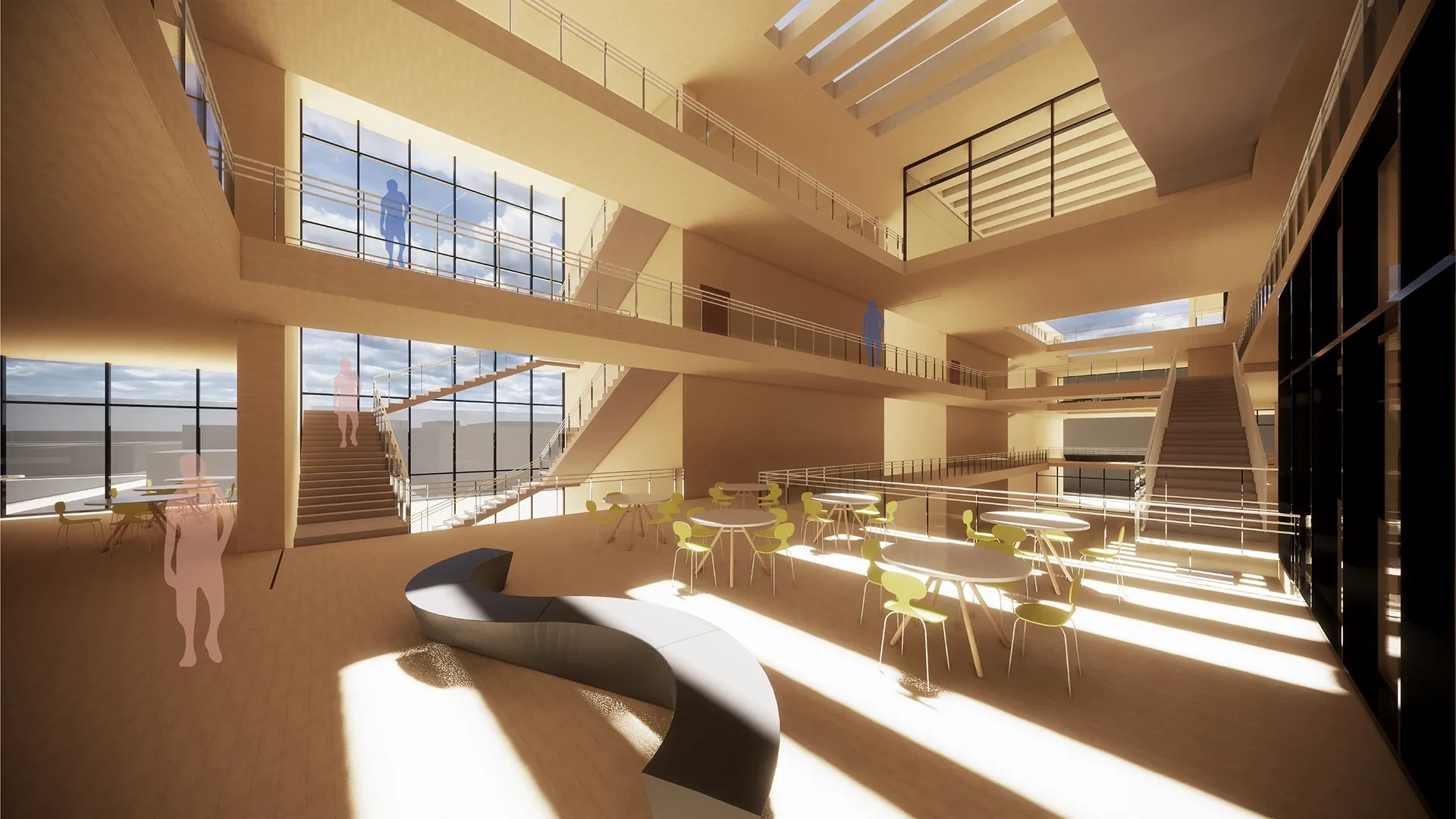
The modular concept makes it possible to adapt the six different kind of food shops to the three interior passageways connected to the surroundings, and resolve vertical accessibility through a level change that organizes two floors.
The project was designed not only as a market for the city, but also as a space that brings people together through the inclusion of a library. In this way, it combines both functions to engage with the surrounding society, ensuring the building becomes part of the wider community rather than serving just a single group of users.
Design
Arch. Jhair Vargas
Arch. Mario Diazgranados
Arch. David Giraldo
Arch. Fernando Grillo
Arch. Juan Claros
Drafting
Luis Orjuela
Lima, Perú · Design · 2021
This project was born as an international architecture competition to redesign two municipal food markets in Lima's La Victoria district, rethinking their urban integration and public space in a post-COVID context. The competition attracted over 100 proposals from multidisciplinary teams across Latin America.
The urban strategy consisted of designing a porous commercial superblock that connects the metro station, nearby neighborhoods, and the park, a key civic space for the surrounding hillside communities. Pedestrian-friendly streets and market links organize commerce, support vendors, and draw activity toward the park and a future civic center.
The architectonical strategy was organized through a rotated modular grid that structures the building and parking areas, creates a diagonal toward the park and the hills, and transforms the market into a space of urban connection.
The modular concept makes it possible to adapt the six different kind of food shops to the three interior passageways connected to the surroundings, and resolve vertical accessibility through a level change that organizes two floors.
The project was designed not only as a market for the city, but also as a space that brings people together through the inclusion of a library. In this way, it combines both functions to engage with the surrounding society, ensuring the building becomes part of the wider community rather than serving just a single group of users.
Design
Arch. Jhair Vargas
Arch. Mario Diazgranados
Arch. David Giraldo
Arch. Fernando Grillo
Arch. Juan Claros
Drafting
Luis Orjuela